대면식 인터랙티브 디스커션
Engage in in-depth discussions with industry experts and your peers about the progress, trends and challenges you face in your research! Interactive discussion groups play an integral role in networking with potential collaborators, provide an opportunity to share examples from your work, and be part of a group problem-solving endeavor.
인터랙티브 디스커션은 대면으로만 진행됩니다.
Wednesday, May 14, 1:10 - 1:55 PM
Engineering Antibodies
BREAKOUT DISCUSSION: Integrating AI/ML to Transform Biologics Design and Optimization
Moderator: Kallol Ray, PhD, Vice President & Head, Global Biologics, Takeda Pharmaceuticals Inc.
- Impacts of AI/ML in protein therapeutics design: speed and innovation,
- Key advancements in AI/ML applications in biologics
- Emerging trends and potential future developments
- Major challenges (technical and computational hurdles, integration with existing workflows and systems)
EMERGING TARGETS FOR ONCOLOGY & BEYOND
BREAKOUT DISCUSSION: What Format for What Disease? How do different antibody formats stack up versus CAR-T, T cell engagers, multispecifics, protein degraders, RNA etc?
Moderator: Catherine Hutchings, PhD, Independent Consultant
- How are different antibody formats performing vs. other Ab-related therapeutic modalities to address efficacy and success in the clinic?
- Hematological vs. solid tumors (and target tissue)
- Oncology vs. non-cancer indications (what have we learnt from each)
- Format and target biology challenges
- The role of Fc domain, epitope, target combinations, IgG versus fragments (Fab, VHH, etc.)?
Engineering Cell Therapies
BREAKOUT DISCUSSION: Navigating the Future of Cell & Gene Therapy: Overcoming Development, Manufacturing, and Commercialization Challenges
Moderator: Michael D. Jacobson, PhD, Managing Partner, Cambridge Biostrategy Associates LLC
- Scaling Up: From Lab to Commercial Manufacturing - Addressing bottlenecks, automation, and cost efficiency
- Regulatory & Quality Challenges - Adapting to evolving global requirements and ensuring product consistency
- Supply Chain & Logistics - Maintaining speed, safety, and traceability in an increasingly complex ecosystem
- Cost & Reimbursement - Innovative pricing models and strategies for improving patient access
- Scientific & Clinical Hurdles - Managing safety risks, durability concerns, and trial complexities
- Ethical & Market Considerations - Balancing innovation, equitable access, and the future direction of CGTs
BREAKOUT DISCUSSION: The Promise of AI in Therapeutic Discovery - Has it Lived up to the Hype?
Moderator: Timothy Riley, PhD, SVP, Discovery, 310.ai
- Review of AI successes and failures
- Evaluate how AI has impacted the speed, cost, and accuracy of therapeutic outcomes
- Expectations vs. reality
- Challenges and limitations
Optimizing Protein Expression
BREAKOUT DISCUSSION: Prokaryotic Expression Systems: Applications, Advancements, and Strategies for Optimization
Moderator: Alex Kirkpatrick, Ph.D, Field Application Scientist, Thermo Fisher Scientific
Prokaryotic expression systems, particularly E. coli, have long been the workhorse for protein expression, significantly contributing to the generation of recombinant proteins for various applications. Join us to explore the applications, strategies & practical solutions for improvement, and advancements in prokaryotic cell-based expression systems.
- Advantages of Different Prokaryotic Systems
- Optimization Strategies for Protein Production
- Current Challenges of Prokaryotic Hosts
- Innovative Approaches and Emerging Trends
BREAKOUT DISCUSSION: Getting the Math Right: Adding and Subtracting Post-Translational Modifications (PTMs) to Recombinant Proteins
Moderator: Christopher Cooper, PhD, Director and Head of Protein Sciences, CHARM Therapeutics
- Choosing an appropriate QC method for your budget
- Moving on from biotinupcoming alternative protein labelling technologies
- Challenges in addition of site-specific PTMs (e.g. phosphorylation) and protein PTMs (e.g. ubiquitin, SUMO)
- Advances in (de)glycosylation and its analysis
Biophysical Methods
BREAKOUT DISCUSSION: Developability Screening for Multispecific Antibodies
Moderator: Michael Dyson, PhD, Vice President, Antibody Discovery & Engineering, Ichnos Glenmark Innovation
- Pre-screen monoclonal arms or final format or both?
- Which are the best HTP developability screens?
- Can in silico methods reliably predict developability and help fix poorly behaved Multispecifics without an antibody structure?
- What are the best late stage developability assays to perform to help Clinical Candidate Selection (CCS)
BREAKOUT DISCUSSION: Characterization of Protein Therapeutics Using Mass Spectrometry
Moderator: Chris M. Chumsae, PhD, Associate Director, Analytical Development, Bristol-Myers Squibb
- Confirmation of protein primary structure
- Detection of common PTMs and influence by process
- Determination of unexpected covalent variants and root cause
Predicting Immunogenicity with AI/ML Tools
BREAKOUT DISCUSSION: HLA Class II Peptide Presentation and Immunogenicity Screening of Therapeutic Antibodies with HLAIIPred
Moderator: Mojtaba Haghighatlari, PhD, Senior Machine Learning Scientist, Pfizer Inc.
- Best practices in data preparation for machine learning of peptidomics datasets
- Novel deep learning approaches for predicting MHC antigen presentation and the modeling challenges
- Interpretability and explainability of the available deep learning models
- New screening strategies for predicting immunogenic hotspots in therapeutic antibodies
BREAKOUT DISCUSSION: Predicting Immunogenicity with AI/ML Tools
Moderator: Sivan Cohen, PhD, Senior Principal Scientist, Genentech
- Enhance AI/ML model performance for immunogenicity prediction by optimizing HLA-II selection and tolerance determination.
- What confidence level is needed for immunogenicity prediction algorithms to impact regulatory decisions
- How can in silico and in vitro approaches for immunogenicity evaluation be strategically integrated, especially when their data conflict?
- Developing AI/ML algorithms for B cell prediction - what does the future hold?
- Application of the in silico prediction tools for the immunogenicity of AAV
Friday, May 16, 7:30 - 8:25 AM
Over Continental Breakfast
Machine Learning Approaches for Protein Engineering
BREAKOUT DISCUSSION: Delivering on the AI Antibody Promise: The AIntibody Benchmarking Competition
Moderators:
Andrew R.M. Bradbury, MD, PhD, CSO, Specifica, an IQVIA business
M. Frank Erasmus, PhD, Head, Bioinformatics, Specifica, an IQVIA business
- AI promises in antibody discovery and optimization: will they really revolutionize the field? or just another way of addressing solved problems?
- What can AI do now? And where are we seeing the greatest value relative to existing technologies?
- The AIntibody benchmarking competition: Did AI deliver on the AIntibody challenges?
- Ideas for future benchmarking competitions
DRIVING CLINICAL SUCCESS IN ANTIBODY-DRUG CONJUGATES
BREAKOUT DISCUSSION: Opportunities for Protein Engineering in ADC Development
Moderator: Greg M. Thurber, PhD, Associate Professor, Chemical Engineering & Biomedical Engineering, University of Michigan
Antibody drug conjugates are showing tremendous promise in the clinic with multiple FDA approvals and clinical-state compounds. A significant effort has improved the linker, payload, and conjugation strategies, but less emphasis has been placed on engineering the protein. In this talk, we will present strategies for antibody engineering including the use of multivalent and/or biparatopic antibodies, epitope selection with antibody/ADC combinations, and Fc-engineering to improve the therapeutic window.
BREAKOUT DISCUSSION: ADCs for Autoimmune Diseases
Moderator: Philipp Spycher, PhD, CSO, Araris Biotech AG
Engineering Bispecific and Multifunctional Antibodies
BREAKOUT DISCUSSION: Next-Generation T Cell Engagers (TCEs)
Moderator: Vincent Muczynski, PhD, Director, NovalGen
The principle of a bispecific antibody targeting CD3 to redirect cytotoxic T cells toward a tumor target has undeniably contributed to the success of T cell engagers and led to the recent approval of several molecules showing undisputed efficacy in both haematological malignancies and solid tumours. A broad range of research programs are now looking at ways to enhance the potential of these molecules and develop next-generation TCEs.
- New technologies to optimize the balance between efficacy and adverse events
- Harnessing multispecific antibody formats for enhanced efficacy/specificity
- Maximizing the efficiency of TCEs in the solid tumor microenvironment?
BREAKOUT DISCUSSION: Switchable Bispecific T Cell Nanoengagers for Controllable Cancer Immunotherapy
Moderator: Noor Momin, PhD, Assistant Professor, University of Pennsylvania
- Design parameters and objectives for T cell engagers
- Engineering strategies to improve their on-target (correct receptor) on-tissue (correct localization)
- Engineering strategies to reduce their on-target (correct receptors) off-tissue (wrong tissue localization)
- Considerations for the timing, reversibility, and translation of these approaches
Next-Generation Immunotherapies
BREAKOUT DISCUSSION: ML to Optimize Immune Cell Engagers
Moderator: Winston Haynes, PhD, Head, Data Science & Machine Learning, LabGenius Ltd.
- Dive into the challenges with engineering immune cell engagers where machine learning might have an impact (i.e. development speed, therapeutic efficacy, clinical safety)
- Discuss the data and models needed to develop superior therapies.
- Highlight different machine learning methods being applied to the design and optimisation of immune cell engagers.
- Explore future directions for machine learning in immune cell engagers.
Maximizing Protein Production Workflows
BREAKOUT DISCUSSION: R&D with the End-in-Mind
Moderator: Bjørn Voldborg, MSc, Head, National Biologics Facility, DTU Bioengineering, Technical University of Denmark
- Determine what your end-product could look like
- Consider the full pipeline of your candidate as early as possible
- Select suitable expression systems early on
- Use regulatory acceptable hosts as soon as possible
Characterization for Novel Biotherapeutics
BREAKOUT DISCUSSION: Particulate Impurity Analysis in Gene Therapy Products: Challenges & Opportunities
Moderator: Andrea Hawe, PhD, CSO, Coriolis Pharma Research GmbH
- Key challenges and strategies for analyzing particulate impurities in gene therapy products, such viral vectors, mRNA-LNPs, etc.
- What types and sizes of particles should we expect?
- How do we assess impurities, when the active itself is a particle?
- What are key techniques for sizing, counting, characterization, and identification or particles?
- Are particulate impurities cQAs for gene therapy products, as in biologics?
* 주최측 사정에 따라 사전 예고없이 프로그램이 변경될 수 있습니다.


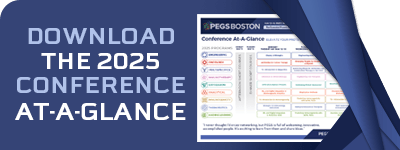
2025년 프로그램
표시하기:

공학 스트림
- Display of Biologics
바이오로직스의 디스플레이 - Engineering Antibodies
항체 공학 - Machine Learning for Protein Engineering
단백질 엔지니어링용 기계학습

종양 스트림
- Antibodies for Cancer Therapy
암치료용 항체 - Emerging Targets for Oncology & Beyond
종양 이외 신규 타깃 - Driving Clinical Success in Antibody-Drug Conjugates
항체약물접합체(ADC)의 임상적 성공의 추진

다중특이성 스트림
- TS: Intro to Multispecific Antibodies
트레이닝 세미나 : 다중특이성항체 입문 - Advancing Multispecific Antibodies
다중특이성항체의 진보 - Engineering Bispecific and Multifunctional Antibodies
이중특이성항체·다기능 항체 공학

면역치료 스트림
- Advances in Immunotherapy
면역치료의 진보 - Engineering Cell Therapies
세포치료 공학 - Next-Generation Immunotherapies
차세대 면역치료

발현 스트림
- Difficult-to-Express Proteins
발현이 어려운 단백질 - Optimizing Protein Expression
단백질 발현의 최적화 - Maximizing Protein Production Workflows
단백질 생산 워크플로우의 최대화

분석법 스트림
- ML and Digital Integration in Biotherapeutic Analytics
바이오의약품 분석에서 ML과 디지털 통합 - Biophysical Methods
생물물리학적 방법 - Characterization for Novel Biotherapeutics
신규 바이오의약품의 특성 평가

면역원성 스트림
- TS: Intro to Immunogenicity
트레이닝 세미나 : 면역원성 입문 - Predicting Immunogenicity with AI/ML Tools
AI/ML 툴에 의한 면역원성 예측 - TS: Bioassay Development and Analysis
트레이닝 세미나 : 바이오어세이 개발과 분석

신규 치료 스트림
- Biologics for Immunology Indications
적응 면역용 바이오로직스 - Radiopharmaceutical Therapies
방사성 의약품 치료 - Next-Generation Immunotherapies
차세대 면역치료

기계학습 스트림
- ML and Digital Integration in Biotherapeutic Analytics
바이오의약품 분석에서 ML과 디지털 통합 - Predicting Immunogenicity with AI/ML Tools
AI/ML 툴에 의한 면역원성 예측 - Machine Learning for Protein Engineering
단백질 엔지니어링용 기계학습