
training-seminars-header

Cambridge Healthtech Institute 트레이닝 세미나에서는 학술적인 이론 및 배경을 폭넓게 다루는 것과 동시에 실제 사례 연구, 직면한 문제, 적용된 솔루션을 제공합니다. 각 트레이닝 세미나에서는 정식적 강의와 인터랙티브 디스커션 및 액티비티를 조합하여 학습 경험을 최대한 높일 수 있습니다. 경험이 풍부한 강사가 현재의 연구에 적용 가능한 컨텐츠에 초점을 맞추고, 이 분야에 처음 입문한 분들에게도 중요한 가이던스를 제공합니다.

트레이닝 세미나는 대면으로만 제공됩니다.

Monday, September 28, 2026  9:00 am - 6:00 pm

TS3A: AI-Driven Design of Biologics: State-of-the-Art ML Models & Real-World Applications

Artificial intelligence has driven remarkable breakthroughs in structure prediction, sequence design, and protein engineering. This course equips researchers - from those seeking a first foothold in the field to practitioners looking for deeper insight into emerging models and their application - with a rigorous, grounded understanding of foundational tools including AlphaFold, Boltz, ImmuneBuilder, ESM, AntiBERTy, ProteinMPNN, and RFDiffusion, as well as emerging pipelines such as BindCraft, RFAntibody and BoltzGen. Three building sessions move from foundational principles to real-world application, examining where the models come from, model selection and thoughtful application, and how performance benchmarks hold up - or don't - in active discovery pipelines.
David P. Nannemann, PhD, Vice President, Rosetta Commons Foundation

Session 1: Foundations 

  • Origins and evolution of AI protein models: from early sequence models to modern structure-based diffusion approaches
  • Understanding training data: sources, biases, and implications for model generalizability with best practices for model selection 

Session 2: Using AI Models

  • AI model selection and thoughtful application, with discussion of inputs and outputs
  • The role of the oracle in generative AI protein design

Session 3: Real-World Applications 

  • Benchmarked performance vs. real-world biologics discovery: navigating the gap
  • In silico selection metrics, sampling strategies, and translating computational results to the lab

INSTRUCTOR BIOGRAPHY:
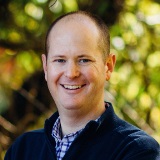
David P. Nannemann, PhD, Vice President, Rosetta Commons Foundation

David is an expert in protein engineering and computational design, with extensive experience applying AI-driven modeling tools in an industry setting. He serves as Vice President of the Rosetta Commons Foundation and Industry Chair on the Rosetta Commons board, helping bridge academic advancements with industry applications. As Managing Member of Rosetta Design Group, he collaborates with companies of all sizes to tackle complex challenges in biologics design. David's deep expertise in leveraging cutting-edge tools like Rosetta, AlphaFold, and diffusion-based models for protein design make him an invaluable guide for participants looking to apply AI-driven biologics design in real-world settings.

TS4A: The End Game: From Lead Optimization to Drug Candidate Selection

Drugs interact with complex physiology to give different activities under different conditions. The discovery candidate selection process must demonstrate these different activities in anticipation of therapeutic outcomes; failure at this stage is the most costly and the translation of drug activity to human pathophysiology is a notorious graveyard for projects. Pharmacology is the unique discipline to prevent this. This course will take registrants through the unique aspects of Pharmacologic analysis of drug-target interaction to convert descriptive data (what we see) to predictive data (what will be seen in other systems). Data from a range of candidate targets (GPCRs, ion channels, enzymes) and ligands (small molecules, biologics, allosterics) will be used to demonstrate the techniques Pharmacology has to offer to quantify drug potency, efficacy and modulatory activity in a variety of settings. In addition to discussion of techniques, a series of case histories will be used to illustrate the concepts.
Terrence P. Kenakin, PhD, Professor, Pharmacology, University of North Carolina at Chapel Hill

Detailed Agenda
Session 1 (9:00-11:00 am)

  • Introduction to candidate selection
  • Some unique features of pharmacology as a discipline
  • The drug discovery landscape and discovery infrastructure
  • Pharmacologic assays: The Eyes to See
  • Pharmacologic tools: The Dose-Response Curve

Session 2 (1:30-3:30 pm)

  • Determining mechanism of action
  • Ligand affinity
  • Ligand efficacy
  • Allosteric protein function

Session 3 (4:00-6:00 pm)

  • Pharmacokinetics for discovery
  • Early safety studies
  • In Vivo residence time and kinetics
  • The Endgame: case studies 

INSTRUCTOR BIOGRAPHY:

Terrence P. Kenakin, PhD, Professor, Pharmacology, University of North Carolina at Chapel Hill

Beginning his career as a synthetic chemist, Terry Kenakin received a PhD in Pharmacology at the University of Alberta in Canada. After a postdoctoral fellowship at University College London, UK, he joined Burroughs-Wellcome as an associate scientist for 7 years. From there, he continued working in drug discovery for 25 years first at Glaxo, Inc., then Glaxo Wellcome, and finally as a Director at GlaxoSmithKline Research and Development Laboratories at Research Triangle Park, North Carolina, USA. Dr. Kenakin is now a professor in the Department of Pharmacology, University of North Carolina School of Medicine, Chapel Hill. Currently he is engaged in studies aimed at the optimal design of drug activity assays systems, the discovery and testing of allosteric molecules for therapeutic application, and the quantitative modeling of drug effects. In addition, he is Director of the Pharmacology graduate courses at the UNC School of Medicine. He is a member of numerous editorial boards, as well as Editor-in-Chief of the Journal of Receptors and Signal Transduction. He has authored numerous articles and has written 10 books on pharmacology.

TS5A: Drug Exposure at the Target: The Role of ADME and Pharmacokinetics

This training seminar describes how pharmacokinetics (PK) affects drug exposure at the intended target. The seminar opens with a foundation of clinical PK including the determination of key PK parameters from Cp-time data. Course materials also cover common preclinical ADME assays that allow estimation of a compound’s human PK properties. The materials bridge the idea of a compound’s PK and its observed pharmacodynamic effects (PD) through coverage of PK/PD modeling. Various drug modalities (e.g., small molecules, antibodies, and peptides) illustrate the concepts of the course.
Erland Stevens, PhD, James G. Martin Professor, Department of Chemistry, Davidson College

Session 1 

  • Drug discovery-typical order of operations 
  • ADME and key pharmacokinetic parameters
  • Modeling Cp-time curves from an IV dose
  • Modeling Cp-time curves from an oral dose 

Session 2 

  • Oral drug space and membrane permeability
  • Metabolic stability and intrinsic clearance
  • Plasma, PPB, and the free drug hypothesis 
  • Compartment models 

Session 3 

  • Pre-formulation and formulation
  • Preclinical species and PBPK
  • Non-small molecule drug modalities
  • PK/PD modeling

INSTRUCTOR BIOGRAPHY:

Erland Stevens, PhD, James G. Martin Professor, Department of Chemistry, Davidson College

Erland Stevens is formally trained as a synthetic organic chemist, with a PhD from the Department of Chemistry at the University of Michigan at Ann Arbor. He specialized in nitrogen heterocycle synthetic methodology. After completing his postdoctoral research at The Scripps Research Institute in La Jolla, CA, he joined the chemistry faculty at Davidson College in Davidson, NC. In addition to teaching organic chemistry, he created an undergraduate medicinal chemistry course and later published a textbook, Medicinal Chemistry: The Modern Drug Discovery Process, with Pearson Education. He then created an online medicinal chemistry course, which has been continuously revised and publicly available for approximately 10 years. He subsequently worked with Novartis to create additional online materials that are used with employees for continuing education purposes. He maintains two YouTube channels - Chem Help ASAP and Inside Drug Discovery.

* 주최측 사정에 따라 사전 예고없이 프로그램이 변경될 수 있습니다.

Choose your language
Traditional Chinese
Simplified Chinese
Japanese
English_


Conference Programs

9월 28일(월)

Symposium: Induced Proximity-Based Drug Discovery
심포지엄: 근접 유도형 Drug Discovery

Symposium: Generative AI/Machine Learning-Driven Drug Design
심포지엄: 생성 AI/ML 드리븐 의약품 설계

Training Seminar: AI-Driven Design of Biologics: State-of-the-Art ML Models & Real-World Applications
트레이닝 세미나: AI 드리븐 바이오로직스 설계 : 최첨단 ML 모델과 실제 응용

Training Seminar: The End Game: From Lead Optimization to Drug Candidate Selection
트레이닝 세미나: 최종 단계 : 리드 최적화로부터 후보의약품 선정까지

Training Seminar: Drug Exposure at the Target: The Role of ADME and Pharmacokinetics
트레이닝 세미나: 타겟에서의 약제 폭로 : ADME와 약물 동태의 역할

9월 29일(화) ~ 10월 1일(목)

Emerging Drug Targets
신규 의약품 타겟

Novel Drug Modalities
신규 의약품 모달리티

Lead Generation Strategies
리드 제너레이션 전략

Innovative Discovery Technologies
혁신적인 탐색 기술

Antibodies against Challenging Targets
난해한 표적에 대한 항체

Next-Generation Conjugates
차세대 컨쥬게이트

Radioligand Therapies
방사성 리간드 요법

Catalog Download
Catalog